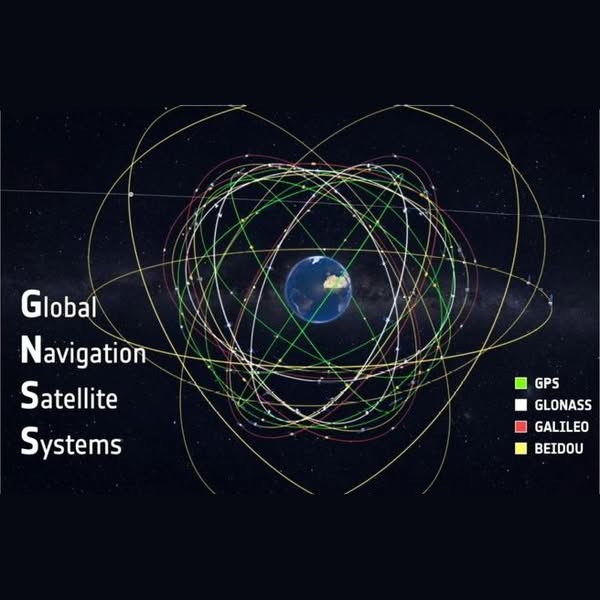
GNSS (Global Navigation Satellite System) receiver technology has advanced significantly in recent years. The number of receiver channels has been steadily increasing, with models offering 555, 672, or even up to 1668 channels. But did you know that the number of operational navigation satellites orbiting the Earth is only around 120 This raises an important question: Does having more channels actually mean better performance?
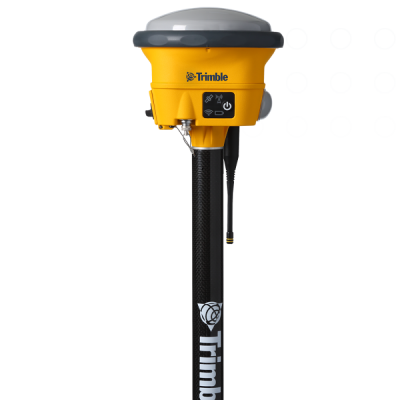
Since the Earth is spherical, about half of the sky is always obstructed from view at any given location. This means a GNSS receiver can only track a portion of the total satellites at a time. In practice, 299 channels are sufficient to handle all current GNSS signals. That’s why a receiver like the Trimble R980, which supports up to 672 channels, is more than capable of handling any GNSS tracking scenario.
The accuracy of GNSS positioning depends on several key factors:
-
Signal Processing Algorithms – Advanced algorithms help mitigate the effects of multipath interference and stabilize signal quality.
-
Correction Sources – Real-time corrections such as RTK or PPP enhance positioning accuracy significantly.
-
Signal Tracking Capability – The ability to track all satellite systems and signal frequencies increases the reliability and precision of the position fix.
While higher channel counts reflect the evolution of GNSS signals—which are becoming more complex and diverse—it doesn't necessarily guarantee better performance. What truly matters is the receiver's capability to support modern GNSS signals, combined with a powerful processing engine that delivers fast and precise results.
Receivers like the Trimble R980 offer all of this in one compact package: multi-constellation tracking, high channel count, and robust real-time processing—delivering unmatched performance in the field.